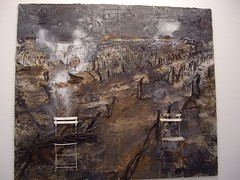
I discovered (and blogged about) Anselm Kiefer, born on 8 March, 1945, one of the most significant artists of our time, more than three years ago in an exhibition at the Essl-Museum. Now there's another exhibition until May which shows 15 works, among them four new ones.
I cite from the exhibit catalog: "For Anselm Kiefer" .... "the approach to recollection, memory, and particularly also to transience and forgetting, plays a very important role. With his often extensive works, he aims to make time tangible. The large-format, anti-heroic images of nature and histories, with decaying monuments, run down spots and morbid landscapes show a present that has been corroded, ravaged by the past. Against the emptiness Kiefer sets names in awkward handwriting, names of places, of gods, of people, occasionally whole lines of poetry, such as by Ingeborg Bachmann or Paul Celan".
The first photo shows "Only with wind with time and with sound". The line is taken from the poem "Exile" by the lyricist Ingeborg Bachmann, a compatriot, by the way.
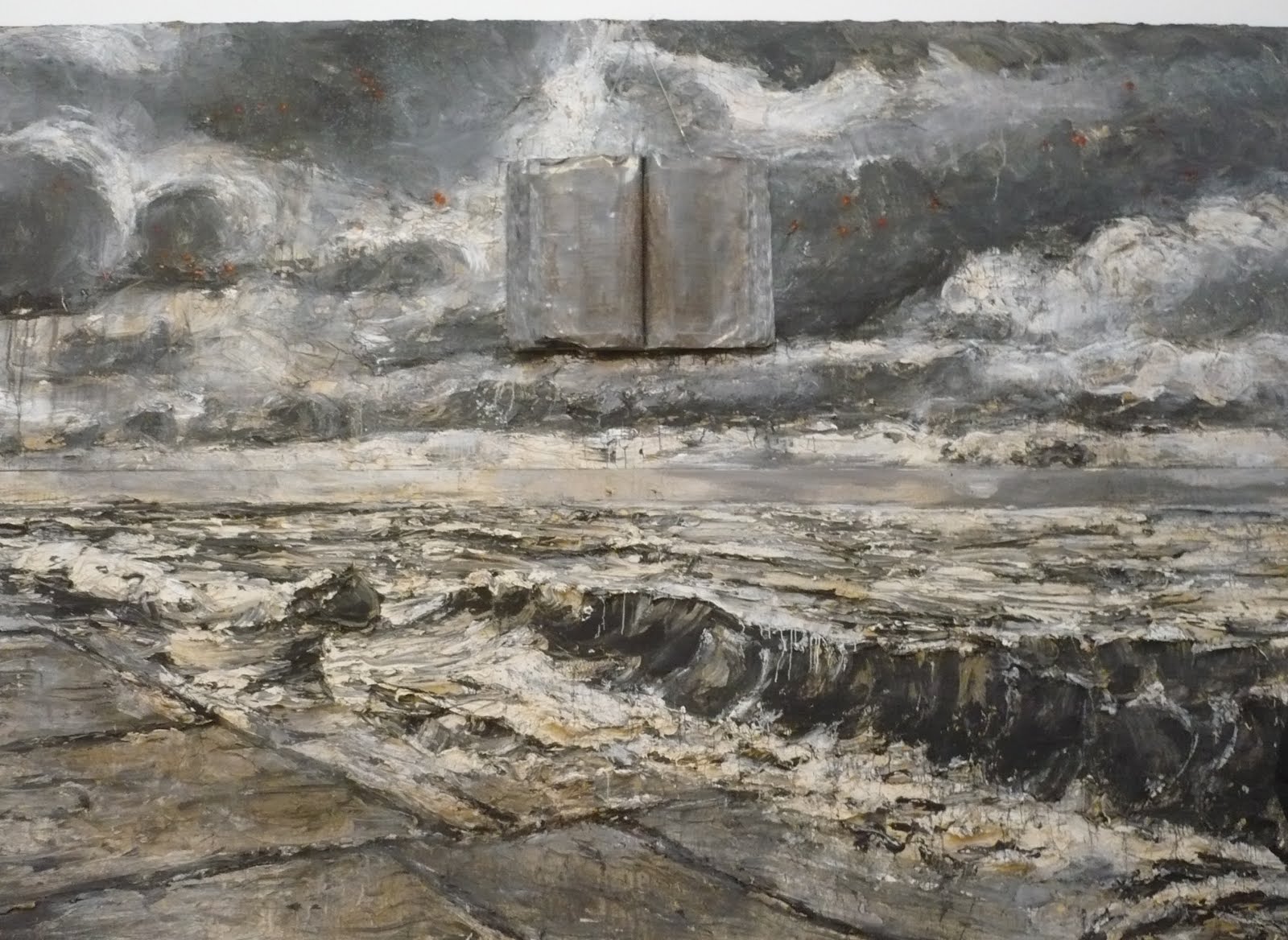
"Only with wind with time and with sound" with its shades of grey, white and blue shows an apocalyptic, powerful, almost overwhelming landscape and sea. In the upper part of the picture you can see a book, made of lead. To Kiefer, leaden books represent the collective repository of memories.
Mela Maresch says in the exhibit catalog: "Nature appears overwhelming ...... However, human beings are still important, for they contribute to the shape of things through their existence ... They share their experiences with the Earth and are active creators, contributing to life's evolving nature".
Anselm Kiefer himself says "I believe that something comes to us from afar, and that memories are not only stored in our mind, but ingrained deeply in our cells". (Citation from the exhibit catalog, p. 115).
I think Anselm Kiefer has the ability to see and to show us parts and pieces of these memories. Maybe that's the reason why I always stand in wonder in front of his works of art and have a deep sense of recognition.
photos 2 and 3 show "Die große Fracht" (The heavy cargo) and "Horlogium".